
Sandblasting carbon fibre and composites can create controlled, uniform microroughness for painting, bonding and other surface treatments. Avoid excessive action on layers that must remain intact. Surface preparation evens the surface, removes light residues and creates microroughness to support subsequent adhesion. Define abrasive, grain size and pressure for the component, aiming at surface preparation rather than deep removal. Properly adjusted blasting prepares a uniform surface for primers and coatings. Avoid unnecessarily aggressive media and pressure. Overly aggressive treatment can alter the surface. Composite structure, geometry and initial condition require specific process settings. White aluminium oxide is normally used in these applications. Choose grain size and pressure according to the composite and required microroughness. Its angular particles create microroughness, while grain size, pressure and technique control the surface action. Pressure affects impact energy. Set it for surface preparation without unnecessarily affecting underlying layers. Choose cabinet size, accessibility and handling according to component dimensions and geometry. Visibility, extraction and filtration must suit the configuration and process. Automotive, motorsport, marine and aerospace components can be bulky. Allow enough room to load, move and reach all required surfaces; special configurations or multiple workstations may be appropriate. Test surface behaviour under actual working conditions. Material, structure, media, grain size and pressure can significantly affect results. Lampo-Lab tests customer samples with different media and parameters before defining the machine configuration. Can carbon fibre be sandblasted? Why blast before painting or bonding? Which abrasive is normally used? How is the machine chosen?
How should the surface be prepared?
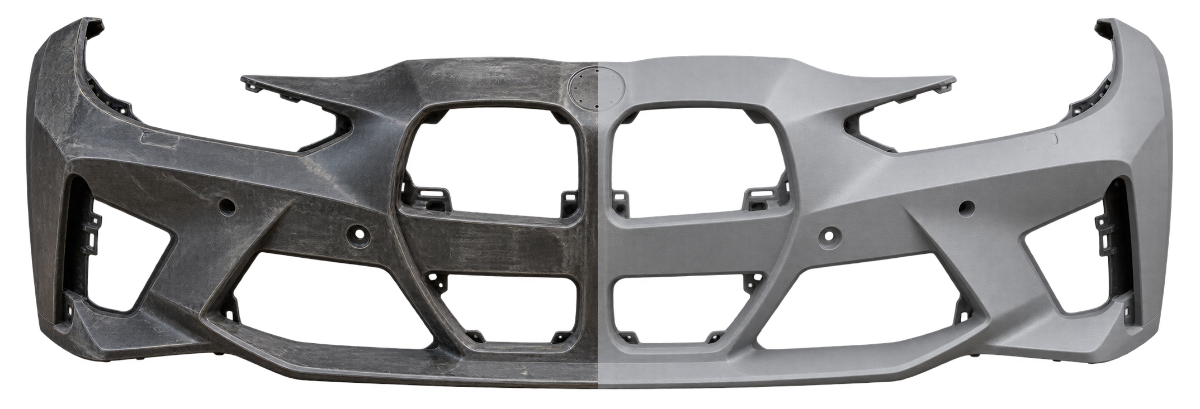
Why sandblast carbon fibre?
Why blast before painting?
Can blasting damage carbon fibre?
Which abrasive is used for carbon fibre?
Why white aluminium oxide?
How important is blasting pressure?
Which machine suits carbon fibre and composites?
When is a large cabinet needed?
How is the process defined for composites?
Why test the actual component?
FAQ – Frequently asked questions
🎯 Yes, using suitable media and controlled parameters for the component.
🎯 To create uniform microroughness and prepare the surface for adhesion.
🎯 White aluminium oxide, with grain size and settings selected for the composite.
🎯 By part size, geometry, accessibility and process requirements, supported by tests on actual components.