
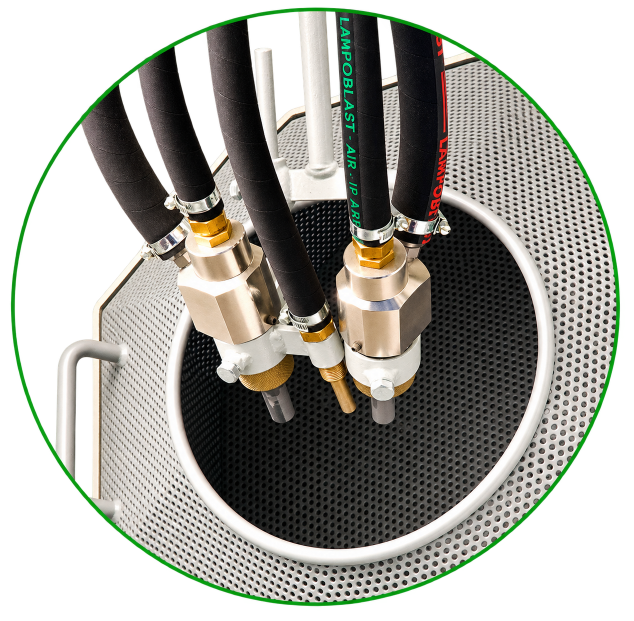
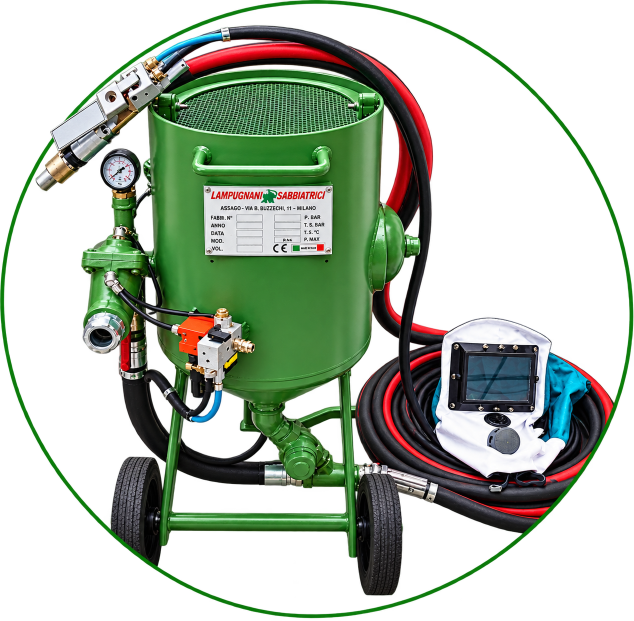
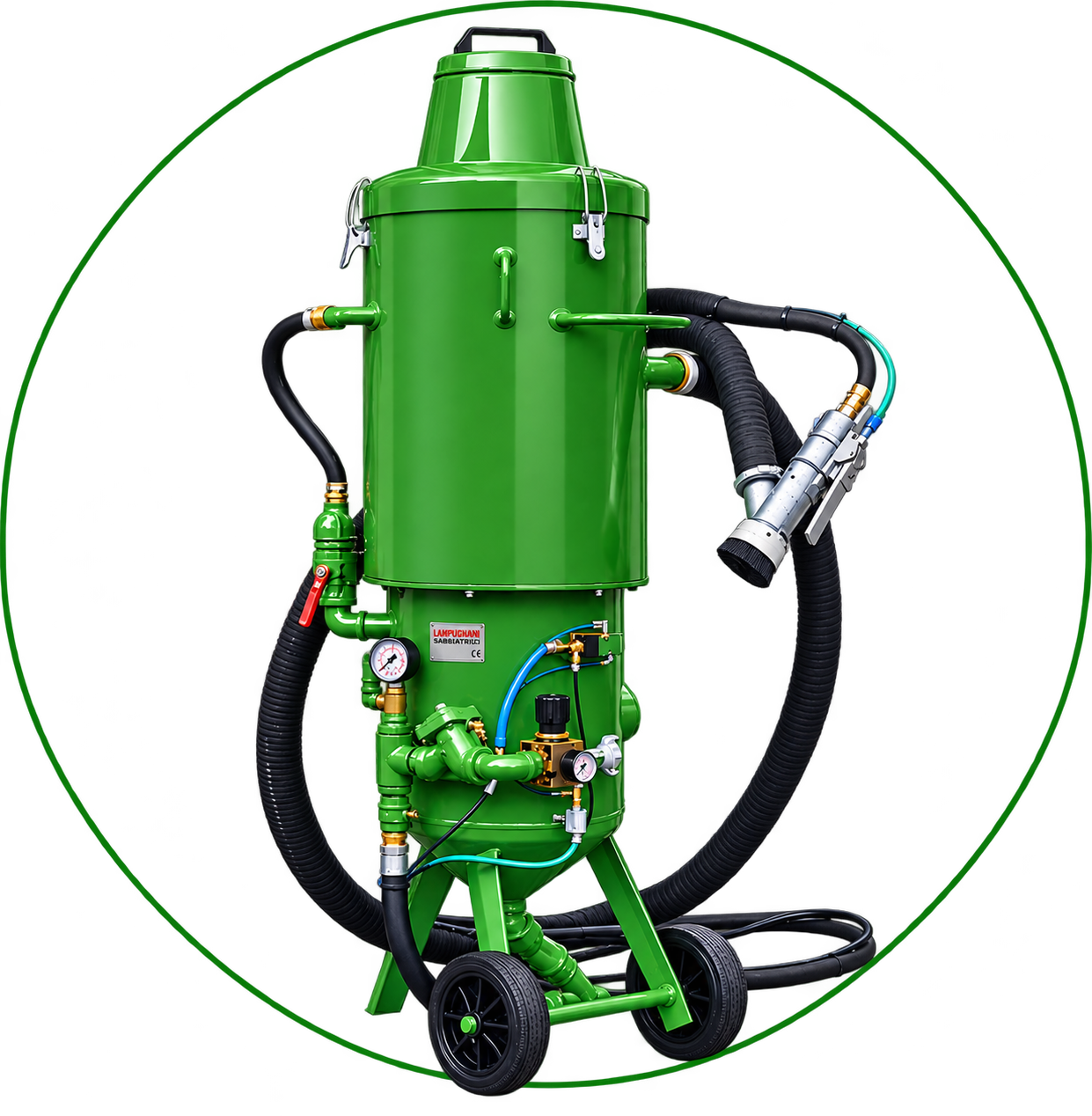
Choosing the right sandblasting machine means identifying the equipment best suited to the components to be treated, the working methods and production requirements. Sandblasting and shot blasting machines are available in different configurations: from manual cabinets with work surfaces to models with rotary tables, automatic systems and portable equipment for treating surfaces directly. Let's explore the main types and how to choose the most suitable solution. A benchtop sandblasting cabinet is suitable for manually treating small components in laboratories, workshops and production departments. Its compact structure allows sandblasting and shot blasting operations to be carried out inside the cabinet. It is a practical solution for those requiring a dedicated workstation for surface cleaning and finishing operations. A sandblasting cabinet with a work surface is one of the most versatile configurations for manual sandblasting and shot blasting. The component is placed on the work surface inside the cabinet and handled directly by the operator, who can reposition it during treatment to reach different surfaces. It is suitable for components of various shapes when flexibility and precise manual control are required. A sandblasting cabinet with a manual rotary table features a circular platform on which the component to be treated is placed. During operation, the operator can rotate the table without continuously lifting the component, making it easier to reach different surfaces. This solution is particularly suitable for mechanical components, cylindrical parts and items requiring treatment on multiple sides. A sandblasting cabinet with an extractable rotary table is designed to facilitate the loading and handling of heavy or bulky components. The table can be pulled out of the cabinet, allowing the component to be positioned using an overhead crane or other lifting equipment. Once returned inside the cabinet, the table can be manually rotated during sandblasting or shot blasting without having to lift the component again. This configuration improves operational convenience and facilitates the treatment of components that are difficult to handle. Automatic sandblasting machines with rotary baskets are designed to treat small components and parts in bulk. The components are placed inside a basket that rotates during the treatment cycle, allowing the abrasive jet to progressively reach their different surfaces. The process takes place automatically, without the need to manually handle each individual component. This solution is suitable for repetitive production processes and quantities of small components compatible with bulk treatment. It is important to ensure that the components can come into contact with one another without being damaged. Portable sandblasting machines allow surface treatments to be carried out directly on site when the items cannot be placed inside a cabinet. They are suitable for steel structures, installed equipment, surfaces and items that are difficult to transport. Open-blast sandblasting requires adequate protection of the working area and the use of appropriate personal protective equipment (PPE), including suitable respiratory protection systems. Depending on the application, water-based dust suppression systems can be used to reduce dust dispersion. Vacuum sandblasting machines with brush heads allow localized treatments to be carried out directly on surfaces. The blasting head is equipped with a peripheral brush that adheres to the surface being treated, creating an enclosed working area. During sandblasting, an extraction system recovers the abrasive material and the dust generated. The equipment is fitted with a separation cyclone and a filtration system, allowing reusable abrasive to be recovered and dust to be collected. Depending on the geometry to be treated, interchangeable heads can be used: Head for flat surfaces, for operations on regular surfaces. Shaped heads, for treating angles and inclined surfaces. These sandblasting machines are particularly suitable for localized treatments, maintenance operations, weld cleaning and work on structures that cannot be moved. Proper contact between the brush and the surface is essential to ensure effective recovery and minimize dust dispersion. The choice mainly depends on the type of components and the working methods. A cabinet with a work surface offers flexibility for manual treatments, while a rotary table makes component handling easier. For heavy components, an extractable rotary table is worth considering, while automatic sandblasting machines with rotary baskets can be used for small components treated in bulk. When treatment must be carried out directly on a structure or surface, portable open-blast sandblasting machines or vacuum recovery systems with brush heads can be considered. At the Lampugnani Sabbiatrici Lampo-Lab, sandblasting and shot blasting tests can be carried out on samples supplied by the customer. These tests make it possible to evaluate the treatment results and identify the machine configuration best suited to specific requirements. Which sandblasting machine should I choose for small components? 🎯 A benchtop sandblasting cabinet or a cabinet with a work surface, depending on the characteristics of the components and operational requirements. What is the purpose of a rotary table in a sandblasting cabinet? 🎯 It allows the component to be manually rotated during sandblasting or shot blasting, making it easier to treat different surfaces. How can heavy components be sandblasted? 🎯 A sandblasting cabinet with an extractable rotary table allows components to be loaded using lifting equipment and rotated during treatment. Which sandblasting machine is suitable for small parts in bulk? 🎯 An automatic sandblasting machine with a rotary basket, provided that the characteristics of the components allow bulk treatment. Is it possible to sandblast directly outdoors? 🎯 Yes, using portable sandblasting machines, with appropriate PPE and suitable systems for protecting and containing the working area. How does a sandblasting machine with a brush head work? 🎯 The head adheres to the surface being treated, while an extraction system recovers the abrasive material and dust during sandblasting. Can vacuum sandblasting machines also treat angles? 🎯 Yes, using specific brush heads for flat surfaces, internal and external angles and other compatible geometries. Do vacuum sandblasting machines completely eliminate dust? 🎯 They are designed to significantly reduce dust dispersion. Their effectiveness depends on proper contact between the head and the surface, the extraction system and operating conditions. Can I carry out tests before purchasing a sandblasting machine? 🎯 Yes. At the Lampo-Lab, tests can be carried out on samples to identify the most suitable solution. Lampugnani Sabbiatrici – Since 1976
Sandblasting Cabinets: Different Configurations
Benchtop Sandblasting Cabinet
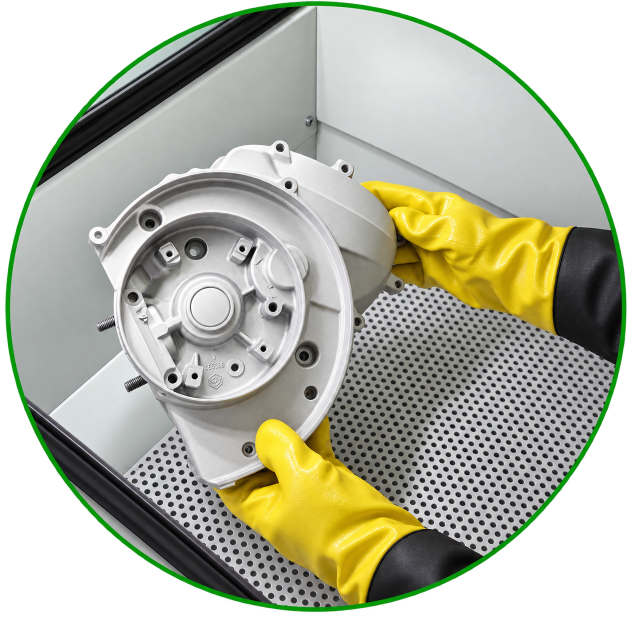
Sandblasting Cabinet with Work Surface
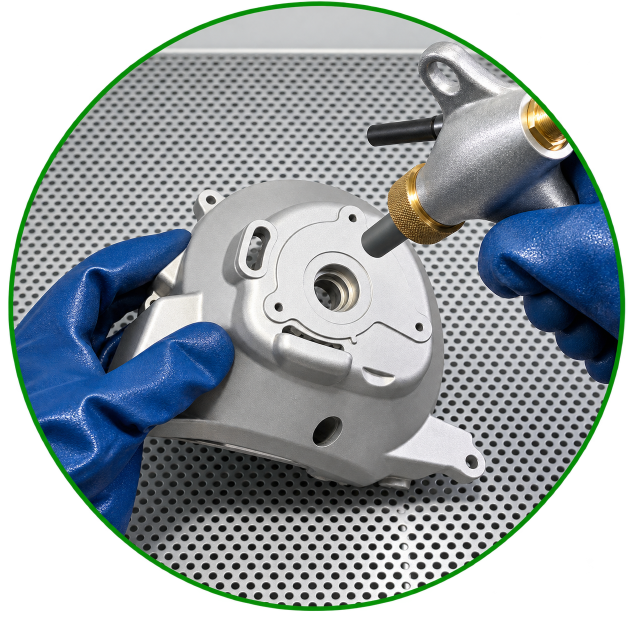
Sandblasting Cabinet with Manual Rotary Table
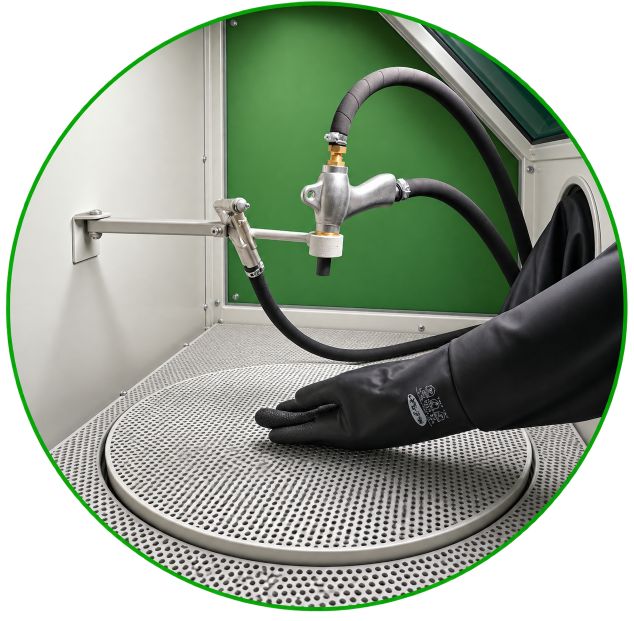
Sandblasting Cabinet with Extractable Rotary Table
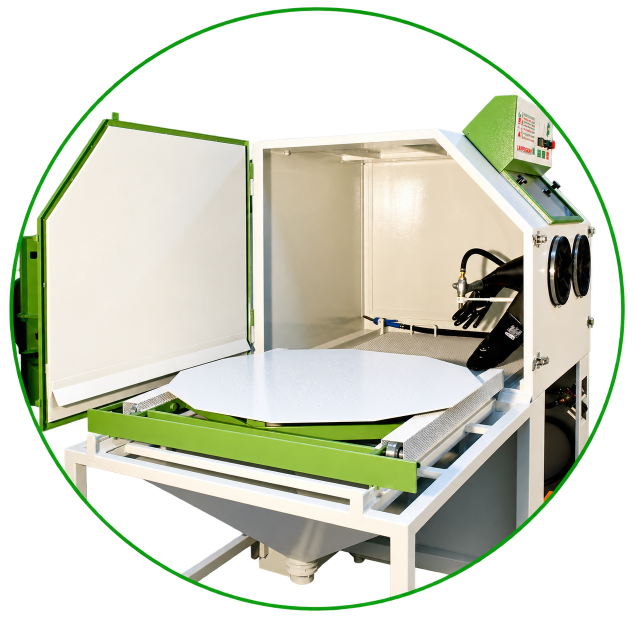
Automatic Sandblasting Cabinets with Rotary Basket
Bulk Sandblasting and Shot Blasting of Small Components
Portable Sandblasting Machines for Outdoor Applications
Open-Blast Sandblasting
Vacuum Sandblasting Machines with Brush Heads
Sandblasting with Dust Extraction and Abrasive Recovery
Brush Heads for Flat Surfaces and Angles
How to Choose the Most Suitable Sandblasting Machine?
Lampo-Lab: The Right Choice Starts with a Test
FAQ – Frequently Asked Questions About Choosing a Sandblasting Machine
...over 50 years... Your Sandblasting Machine!